TCP/IP & Networking Fundamentals
Master the OSI and TCP/IP models, understand IP addressing, learn common protocols, and explore the TCP handshake for building a solid foundation in network communication and security.
OSI Model (7 Layers)
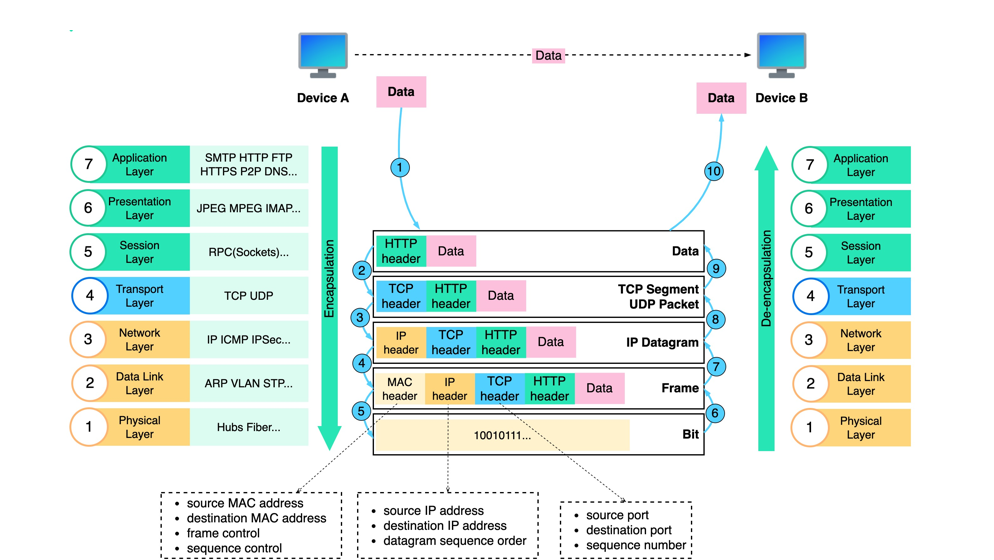
The Open Systems Interconnection (OSI) model is a conceptual framework for understanding network communication. Each layer has specific functions and communicates with layers above and below it.
Application Layer
User applications and services (browsers, email, FTP, DNS, HTTP, HTTPS)
Example: Gmail, Telnet, SSH, HTTP requests
Presentation Layer
Data formatting, encryption, compression (JPEG, MPEG, SSL/TLS)
Example: Data encryption, character encoding, compression
Session Layer
Manages connections and sessions (RPC, NetBIOS, Sockets)
Example: Managing login sessions, maintaining connections
Transport Layer
End-to-end communication and data delivery (TCP, UDP)
Example: TCP connection establishment, UDP datagram transmission
Network Layer
Routing and logical addressing (IP, ICMP, IPsec)
Example: Router decision making, IP addressing, ping requests
Data Link Layer
Physical addressing and framing (MAC, ARP, VLAN, STP)
Example: MAC address translation, frame creation
Physical Layer
Raw bit transmission (cables, hubs, fiber, radio waves)
Example: Ethernet cables, WiFi signals, fiber optics
OSI Model Encapsulation Diagram